
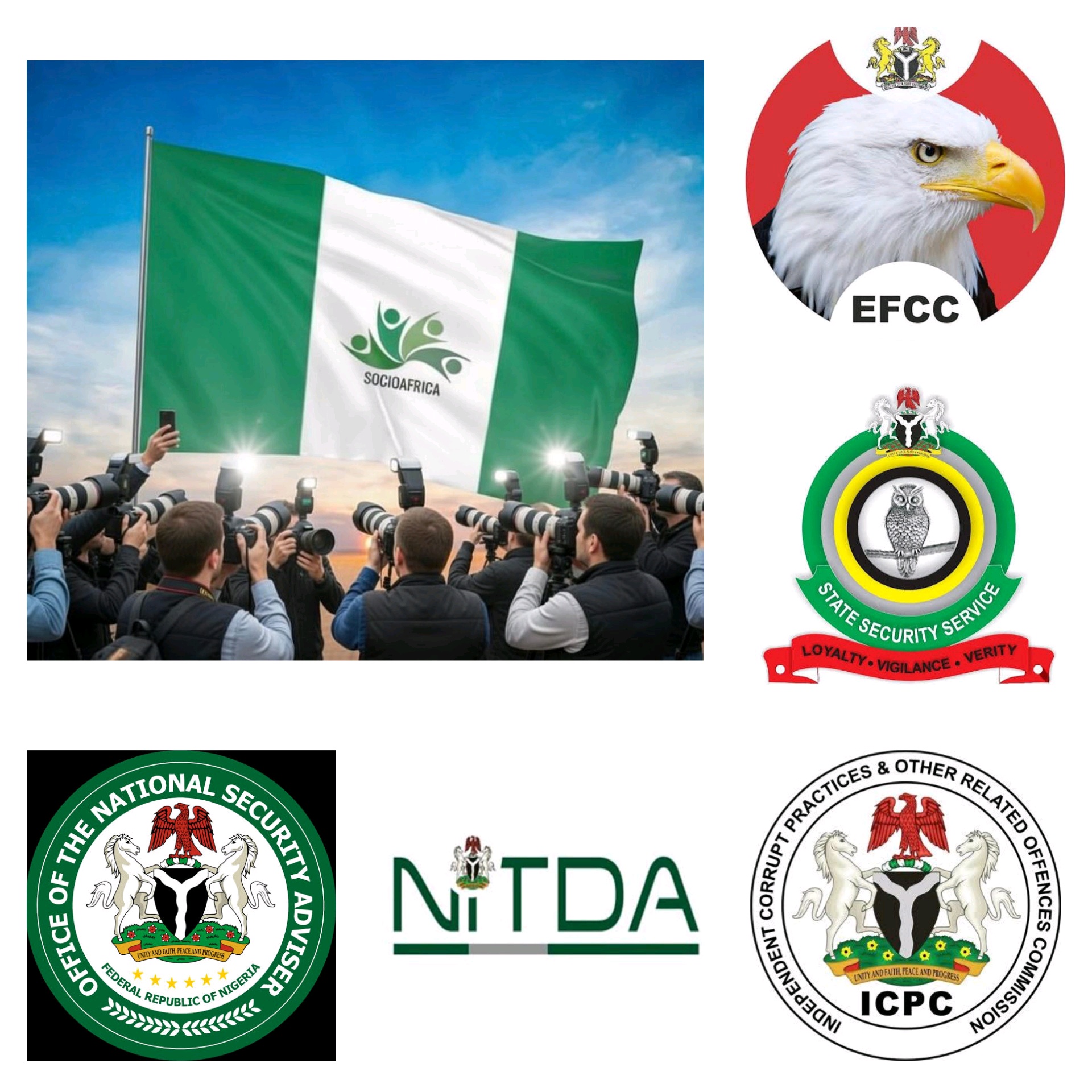
According to internal communications and strategic security briefings, the intelligence package was transmitted to major Nigerian agencies including the Economic and Financial Crimes Commission (EFCC), the Department of State Services (DSS), the National Security Adviser (NSA), the National Information Technology Development Agency (NITDA), and the Independent Corrupt Practices Commission (ICPC).
The development comes amid growing concerns over cyberattacks, digital fraud, data exploitation, and coordinated online activities targeting institutions, businesses, and citizens across Africa. While official investigations remain ongoing, Socio Technologies Limited stated that the intelligence shared was aimed at strengthening national cybersecurity resilience and supporting lawful efforts to combat cybercrime and digital sabotage.
A Call for Cybersecurity Unity
Speaking through strategic communications associated with the organization, representatives connected to Socio Technologies Limited emphasized the need for stronger cooperation between governments, ethical hackers, cybersecurity researchers, and technology organizations in defending Africa’s digital infrastructure.
The organization noted that cyber threats are evolving rapidly and increasingly affect:
- Financial systems
- Government infrastructure
- Telecommunications
- Educational institutions
- Youth-focused digital ecosystems
- Emerging African startups
The report described cybersecurity not merely as a technical issue, but as a matter of national stability, economic protection, and continental development.
Digital Sovereignty and Africa’s Future
SocioAfrica and SocioAsia have repeatedly advocated for what they describe as “digital sovereignty” — the idea that African and Asian nations should strengthen their independent technological capabilities, cybersecurity defenses, and digital cooperation frameworks.
The intelligence release reportedly forms part of a broader effort to:
- Support lawful cybercrime investigations
- Encourage responsible cybersecurity practices
- Promote ethical hacking initiatives
- Protect young Africans online
- Build stronger trust between citizens and digital institutions
Growing Attention Around Cyber Intelligence Networks
Security analysts have increasingly warned that decentralized online groups and anonymous cyber collectives can pose risks when engaged in unlawful activities such as unauthorized system intrusion, fraud operations, coordinated attacks, or infrastructure disruption.
Experts continue to stress that allegations involving any cyber group should be investigated carefully and lawfully by competent authorities, with evidence handled through proper legal and forensic procedures.
A New Era of Public-Private Cyber Collaboration
The latest development highlights a growing trend in which technology organizations and civic innovation platforms are playing a larger role in supporting cybersecurity awareness and intelligence-sharing efforts.
As Africa’s digital economy continues to expand, collaboration between public institutions and responsible technology stakeholders is expected to become increasingly important in protecting innovation, financial systems, and online communities from emerging cyber threats.